
Foundational Rolfing® Education
Rolfing® Works Directly With the Fascia
Changing fascial relationships can change posture, alignment, and range of motion throughout the body
Fascia is the connective-tissue network that surrounds and links the muscles, joints, and structures of the body into a single continuous web.
It is the tissue Rolfers work with to create structural change. When fascia becomes restricted, the effects can extend beyond one muscle or one painful point — the network itself is continuous.
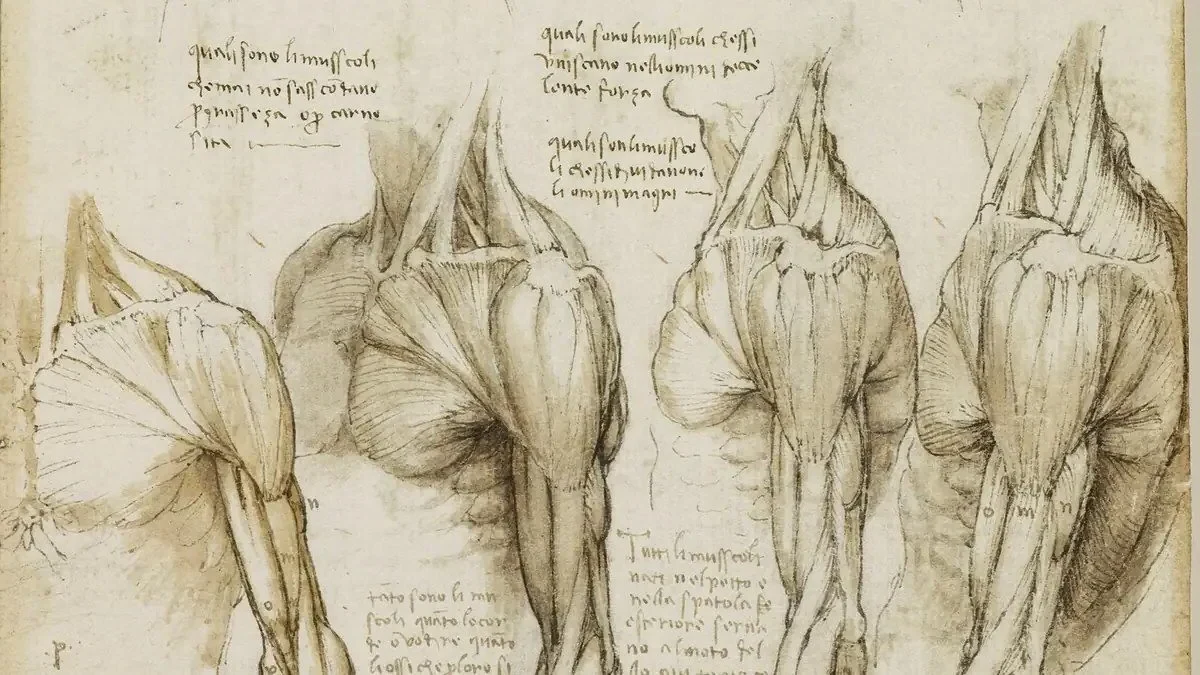
Classical anatomical drawing illustrating the body's muscular and connective structures.
Fascia: The Tissue of Structure
The Body Is Held Together by a Continuous Connective Web
Fascia forms one continuous connective network throughout the body. It surrounds muscle fibers, forms sheets and compartments around muscle groups, connects one region to another, and helps the body maintain its form while still allowing movement.
The network is continuous, so tension or restriction in one area can influence movement elsewhere. The place where pain is felt may be only one part of a larger structural relationship.
Where you feel the problem and where the structural pattern begins may be two different places.
Surrounds
Fascia envelops muscles and other structures.
Links
It connects regions of the body into one structural network.
Transmits
Restriction in one area can influence motion and tension elsewhere.
Adapts
The tissue changes in response to injury, repetition, posture, and sustained tension.
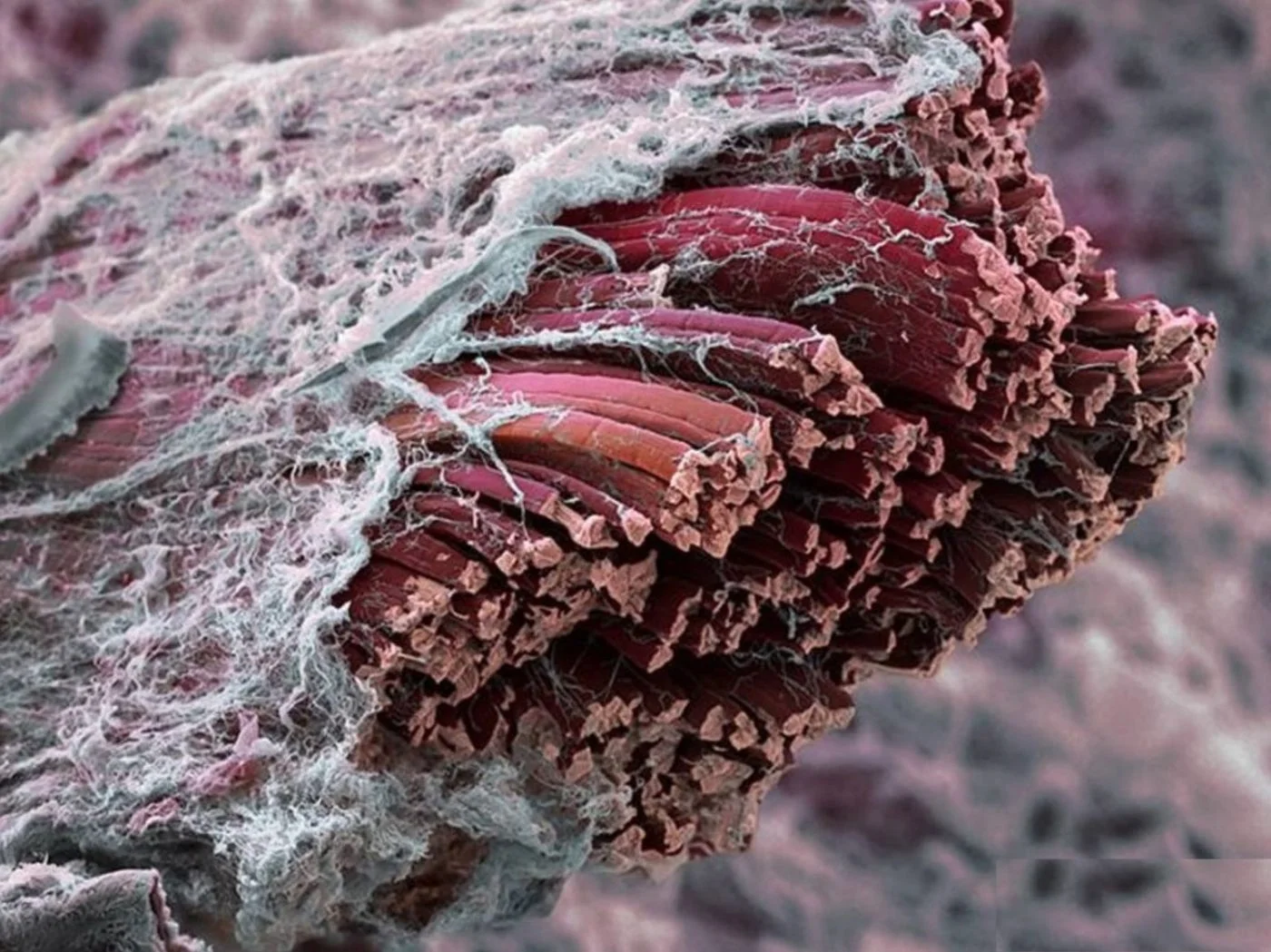
Magnified muscle and connective tissue, showing the web-like fascia surrounding muscle fibers.
Fascia: The Tissue of Structure
See the Tissue Rolfers Work With
Under magnification, fascia appears as an intricate web of connective tissue surrounding and interweaving with muscle. It provides strength and structural continuity in several directions at once while still permitting tissues to slide, lengthen, and adapt.
One of the simplest ways to understand this is an orange or tangerine. Most of the fruit is fluid-filled pulp, yet it holds its form: thin white membranes divide, wrap, and support the sections. The human body relies on connective tissue in a similarly pervasive way.
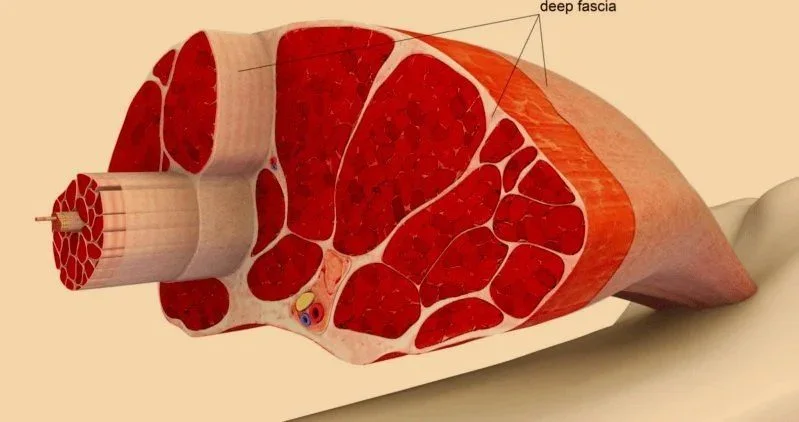
Deep fascia forms sheets and compartments around muscle groups.
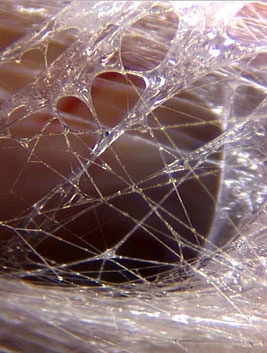
Magnified fascia reveals the web-like connective tissue network.
Fascia in Place
It Wraps, Separates, and Connects
This image shows fascia where it is easiest to understand: as thin connective sheets surrounding and separating muscles while remaining continuous with the surrounding structure. It makes visible why restriction in this tissue can influence both local movement and the larger mechanical relationships of the body.
A Simple Analogy
Think of an Orange
The thin white membranes hold individual sections together, divide one region from another, and help the whole fruit maintain its form. That visual makes the otherwise invisible role of connective tissue much easier to grasp.
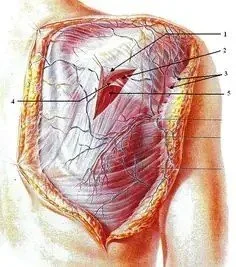
Just beneath the skin is a continuous sheet of fascia.

How Restriction Develops
Life Leaves Its Mark on the Tissue
Injury, repetitive movement, prolonged tension, posture, and the accumulated demands of life can leave areas of the connective tissue restricted and less adaptable.
When the tissue no longer moves freely, the body begins to organize around that limitation. Other regions compensate. Movement changes. Load is transferred differently. Over time, what began as a local restriction may become part of a larger structural pattern.
Injury
Old and recent injuries can alter tissue mobility and movement patterns.
Repetition
Repeated movement can reinforce the same structural demands again and again.
Posture
Habitual positioning influences where tension is carried over time.
Prolonged Tension
Sustained contraction can leave the surrounding tissue less free to move.
Structural Adaptation
The body organizes itself around what is available.
When one region loses freedom, the rest of the structure adapts around it. Rolfing® follows those relationships through the surrounding structure to understand the larger pattern of restriction.
The Larger Pattern
Pain Often Exists Within a Structural Relationship
Rolfing® is particularly useful for seeing how one part of the body influences another. The treatment asks two linked questions: “Where does it hurt?” and “What is happening through the surrounding structure?”
Ankle → Gait
An injured ankle can change the way a person walks, altering load through the leg, pelvis, and spine.
Hips → Low Back
Restricted hips can change the forces passing through the lower back and sacrum.
Neck & Shoulder → Arm
Tension through the neck and shoulder can affect arm movement and contribute to irritation around nerves and other tissues.
How Does Rolfing® Release the Fascia?
Direct, Specific Work With Connective Tissue
Fascia is strong tissue. When adhesions and restrictions develop, ordinary stretching or surface work may not change the deeper binding relationships that are limiting motion.
Rolfing® uses deep, specific hands-on work to engage those restrictions directly. The work is organized around the structure of the body, using specific pressure and movement to change relevant fascial relationships.
I assess posture and movement, identify where tissue is shortened or bound, work through the relevant fascial relationships, and then reassess how the body moves around the change.
Observe
Look at posture, movement, range of motion, and the larger structural pattern.
Find the Restriction
Locate connective-tissue limitations that are reducing movement or contributing to compression.
Release & Reassess
Work directly with the tissue, then see what changes in movement, range, and function.
Experience Rolfing®
Feel the Difference in the Tissue
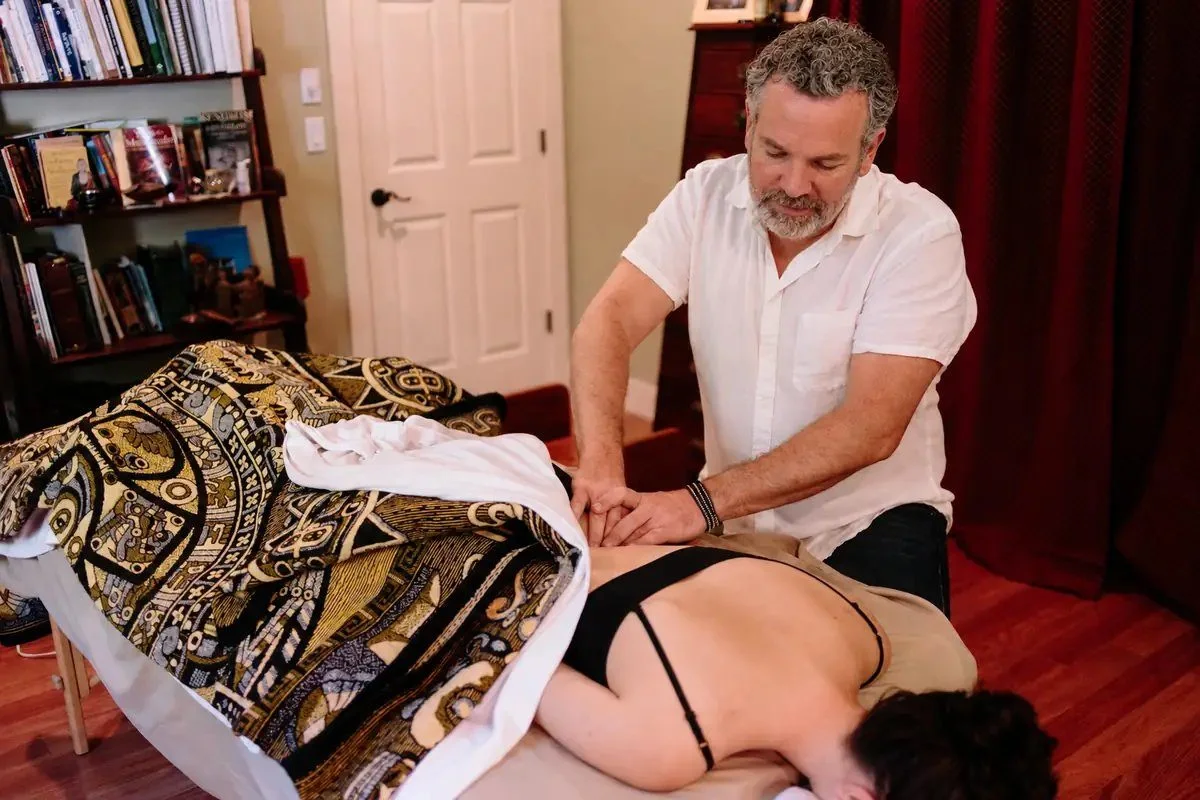
Fascia is easier to understand when you can feel the change directly. A Rolfing® session allows us to assess the structural pattern, work with the restricted tissue, and see what changes in movement and function are possible.
New Patient Rolfing®
90 minutes · $185 · In person